
If you feel like your FQHC is being buried under a mountain of data portals, you aren’t alone. Just a few years ago, managing the 340B drug pricing program was primarily about internal audits and HRSA compliance. Today, it’s a full-blown data war.
With manufacturers demanding claim-level data through a fragmented landscape of portals: 340B ESP™, Truzo (by Kalderos), and manufacturer-specific uploads for giants like Eli Lilly and Novo Nordisk: the operational burden has shifted from pharmacy management to high-stakes data engineering.
The penalty for a single mistake? Pricing denials.
When a manufacturer restricts your access to 340B pricing, your savings vanish, your contract pharmacy revenue plummets, and your CFO starts asking very uncomfortable questions. At GapRx 340B Consultants LLC, we see these "pricing nightmares" daily. Most of them are entirely preventable.
Here are the seven most common mistakes FQHCs and covered entities make when navigating multi-portal data submissions, and exactly how to fix them.
1. Treating 340B ESP™ as a "Set and Forget" Monthly Task
Many entities treat data submission like a standard monthly report. They pull the data, upload it once, and assume they are covered.
The Risk: Most manufacturers now require submissions twice per month (typically on the 1st and 15th). If you miss a window, or if your data only covers a portion of the reporting period, manufacturers may trigger a "pricing block" at the wholesaler level. Once restricted, it can take weeks to get back into their good graces.
The Fix: Establish a bi-monthly cadence. Don't wait for the portal to remind you. Treat the 1st and 15th as hard compliance deadlines. If you are struggling to keep up with the volume, look into automated manufacturer compliance & 340B ESP management to handle the heavy lifting for you.
2. Ignoring the "45-Day Lookback" and NDC Formatting
Accuracy in 340B data is non-negotiable. We often see entities submit data that is technically correct but formatted in a way the portal rejects.
- NDC Formatting: ESP requires an 11-digit NDC format with leading zeros. If your TPA exports 10-digit NDCs or includes hyphens, the portal will reject the line item.
- The Lookback Window: Most manufacturers enforce a 45-day window from the date of dispense. If your data pull lags or if you are "catching up" on old claims, those submissions will be denied for pricing restoration because they fall outside the manufacturer's accepted window.
The Fix: Build a data validation layer into your workflow. Before any file hits a portal, it should be scrubbed for 11-digit NDC compliance and date-stamped against the 45-day lookback rule. If a claim is too old, don't waste time submitting it: focus on ensuring the next batch is on time.
3. Relying on "Raw" TPA Exports Without Mapping
Your Third-Party Administrator (TPA) provides great reports, but they aren't designed for ESP or Truzo. A common mistake is taking a CSV directly from a TPA and attempting to upload it.
The Risk: Every portal has specific column-mapping requirements. If your "Prescriber NPI" column is labeled "Provider_ID" in your TPA report, the portal will throw an error. Worse, some TPAs use different identifiers for contract pharmacies that don't match what the manufacturer expects.
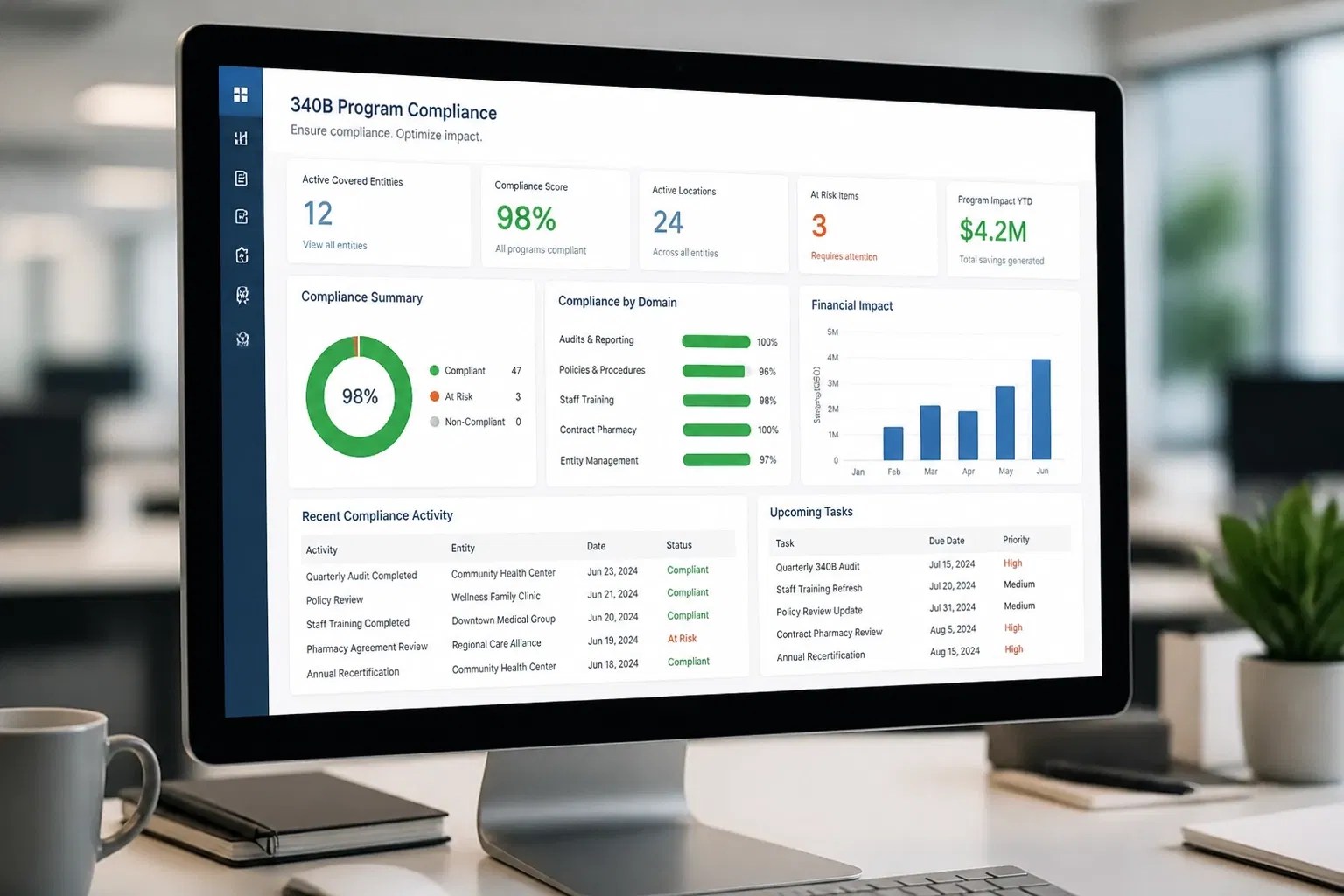
The Fix: You need a "translation" layer. Whether you use a manual Excel template or advanced analytics software, you must map your TPA data to the specific portal requirements. Each TPA you work with likely needs a custom mapping profile to ensure 100% acceptance rates.
4. The "Boutique" Portal Blind Spot: Truzo and Beyond
While 340B ESP™ is the biggest player, it’s not the only one. Manufacturers like Alkermes and Puma use Truzo, while others have their own proprietary "integrity" portals.
The Risk: Focusing solely on ESP creates a "blind spot." You might be compliant with 20 manufacturers but still seeing pricing denials for others because you forgot to check the Truzo queue or the specific requirements for a specialty drug manufacturer.
The Fix: Maintain a Manufacturer Portal Matrix. This should list every manufacturer your entity uses, which portal they require, their specific submission frequency, and their lookback window. If you manage multiple contract pharmacy networks, this matrix is your compliance bible.
5. Failing to Reconcile Pricing Restoration at the Wholesaler
This is the most "expensive" mistake an FQHC can make. Just because the portal says "Success" doesn't mean your pricing has been restored.
The Risk: There is often a lag of 10–14 days between a successful data submission and the wholesaler actually updating your 340B account. If you resume high-volume ordering assuming the price is fixed, you might end up buying at WAC (Wholesale Acquisition Cost) instead of 340B.

The Fix: Implement a "Verified Restoration" protocol. After a submission, your team must check the wholesaler portal (e.g., McKesson, Cardinal, AmerisourceBergen) to confirm the 340B price is active for that specific NDC before placing large orders. If the price isn't there, you need to escalate with the manufacturer immediately.
6. Data Integrity Gaps: Missing NPIs and Duplicates
Manufacturer portals are designed to find reasons to deny your claims. Duplicate claims and missing identifiers are the easiest "red flags" for them to catch.
- Missing NPIs: If a claim is missing a valid Prescriber NPI, it’s an automatic denial.
- Duplicates: If you submit the same claim in two different cycles, it triggers a "duplicate discount" alert, which can lead to a HRSA 340B audit trigger.
The Fix: Run a de-duplication script on every data set before submission. Additionally, cross-reference your claims against your internal EHR data to fill in missing NPIs or patient identifiers. High-integrity data is the best defense against manufacturer pushback.

7. Lack of Internal Governance and Audit Logs
Who submitted the data for May 15th? What were the error codes? Why was the Eli Lilly pricing restricted for two weeks? If you can’t answer these questions in five minutes, your governance is failing.
The Risk: During a HRSA audit or a manufacturer inquiry, you must be able to prove what you submitted and when. Without a clear audit trail of your multi-portal activities, you are defenseless against claims of non-compliance or diversion.
The Fix: Keep a centralized "Submission Log." Document every upload, every error message, and every communication with portal support teams. This documentation is just as important as the data itself.
How to Stop the Pricing Denials Today
The 340B landscape in 2026 is complex, but it doesn't have to be a nightmare. The key to maintaining your entity’s financial health is moving away from manual, reactive data handling and toward a proactive, compliant framework.
At GapRx 340B Consultants, we specialize in taking this burden off your plate. From fully automated ESP management to real-time analytics that track your pricing restoration, we treat your program like it’s our own.

Don't wait for your next "Price Denied" notification to take action. Contact us today to schedule a comprehensive data compliance health check and ensure your savings stay where they belong: supporting your patients.